

Quick answer: No, Etsy does not require barcodes for product listings. You can sell physical goods, digital downloads, and handmade items without a UPC or EAN. However, if you plan to cross-list your inventory on Amazon, Walmart, or eBay, you will need a valid GS1-format barcode to generate those specific marketplaces’ product identifiers.
- Etsy uses its own internal ID system; external barcodes are ignored for listing creation.
- Amazon and Walmart require GS1-issued or valid GS1-format UPCs for most physical products.
- Etsy sellers often buy barcodes only when expanding to other marketplaces, not for Etsy itself.
- Handmade items on Etsy do not need barcodes, but mass-produced goods sold elsewhere do.
- Resold GS1-format barcodes work for standard listings on Amazon and Walmart but not for Brand Registry.
Many new sellers assume that every online marketplace requires a barcode, leading them to purchase UPCs unnecessarily. The direct answer is no: Etsy does not require barcodes for any type of listing, whether it is a handmade craft, a vintage item, or a digital download. Etsy generates its own internal unique identifier for every listing, which functions independently of any physical product code. You can build a successful six-figure Etsy shop without ever buying a single barcode.
However, the situation changes if you plan to diversify your sales channels. If you intend to list the same physical products on Amazon, Walmart, or eBay, you will need valid product identifiers. This is where the confusion often arises: sellers conflate the requirements of major retail marketplaces with the simpler structure of Etsy. Understanding the distinction saves you money and prevents listing rejections on other platforms.
Does Etsy Require a Barcode for Listings?

Etsy’s listing system is designed for small businesses and individual creators who may not have access to GS1 registration fees. When you create a new listing on Etsy, the platform asks for a title, description, price, and shipping details. It does not ask for a UPC, EAN, or GTIN. The system assigns a unique Etsy ID to your listing, which is what buyers and the search algorithm use to identify the product. This ID is visible in the URL but is not a barcode.
Even if you manually enter a barcode number in the listing description or attributes, Etsy’s backend does not use it for inventory management or search indexing. The platform does not validate barcodes against the GS1 database, nor does it link your Etsy listing to a global product database. This means that having a barcode on your product packaging does not automatically create a listing on Etsy, and having a listing on Etsy does not require a barcode on your product.
For digital products, the absence of a barcode is even more pronounced. Digital downloads, such as printable art or software, have no physical form, making barcodes irrelevant. Etsy handles these transactions entirely through its digital delivery system, which relies on email addresses and secure download links rather than physical scanning.
When You Actually Need a Barcode: Cross-Marketplace Selling
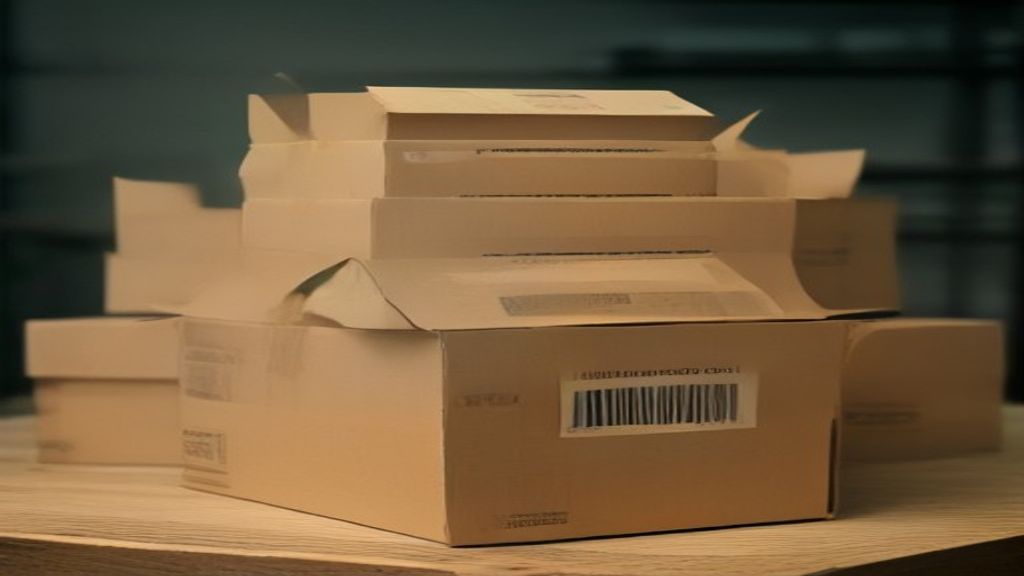
The primary reason an Etsy seller needs a barcode is not for Etsy itself, but for expanding to other marketplaces that rely on standardized product identification. Amazon, Walmart, and eBay all require valid product identifiers for most physical goods. If you are selling a unique handmade item on Etsy, you might not need a barcode there, but if you want to list the same item on Amazon, you will need a UPC or EAN to create that Amazon listing.
Amazon uses the Global Trade Item Number (GTIN), which includes UPC (12 digits, primarily US) and EAN (13 digits, international). When you create a new product on Amazon, the system asks for a GTIN. If you do not have one, you must request a GTIN exemption, which is a lengthy process and only approved for specific categories like handmade or private label items that are not available from other sources. For most sellers, purchasing a valid GS1-format barcode is faster and more reliable than applying for an exemption.
Walmart follows a similar model. Their marketplace requires a GTIN for all physical products. Unlike Amazon, Walmart is stricter about the source of the barcode. They prefer barcodes that are registered in the GS1 database under the seller’s company name. However, for standard listings without Brand Registry, valid GS1-format barcodes that are not registered to the seller can still be accepted in many cases, though this carries a higher risk of listing suppression if the barcode is flagged as invalid or reused.
Understanding UPC, EAN, and GTIN: The Differences
Before purchasing any codes, it is crucial to understand the terminology. GTIN (Global Trade Item Number) is the umbrella term for all standardized product identifiers. UPC (Universal Product Code) is the 12-digit version of a GTIN used primarily in North America. EAN (European Article Number) is the 13-digit version used internationally. When people say they need a “barcode,” they usually mean a UPC or EAN, which are specific formats of GTINs.
The table below outlines the key differences and where each is typically required. Note that while Etsy does not use any of these, other platforms do.
| Term | Format | Primary Use | Required on Etsy? | Required on Amazon? | Required on Walmart? |
|---|---|---|---|---|---|
| UPC | 12 digits | North American retail | No | Yes (for most physical goods) | Yes (for most physical goods) |
| EAN | 13 digits | International retail | No | Yes (for international listings) | Yes (for international listings) |
| GTIN | 12 or 14 digits | Global standard identifier | No | Yes (umbrella term) | Yes (umbrella term) |
| Etsy ID | Alphanumeric | Etsy internal listing | Yes (auto-generated) | No | No |
It is a common mistake to buy a 14-digit GTIN when you only need a 12-digit UPC for US-based Amazon listings. While both work, using the correct format ensures compatibility with all scanners and database lookups. If you are selling exclusively in the US, a 12-digit UPC is sufficient. If you plan to sell internationally, an 13-digit EAN is preferable.
Where to Buy Barcodes and What to Look For
If you decide you need barcodes for cross-listing, you have two main options: registering directly with GS1 or purchasing resold GS1-format barcodes. GS1 registration is the official route, which ties the barcode prefix to your company name in their global database. This is required for Amazon Brand Registry and for Walmart sellers who want to avoid any risk of listing suppression. However, GS1 registration fees can be high, starting around $250 for the first year and increasing annually.
For many small sellers, purchasing resold GS1-format barcodes is a more cost-effective solution. These are valid, unused barcodes that were originally issued by GS1 but are being resold. They work perfectly for creating standard listings on Amazon, eBay, and Walmart. However, there is a critical limitation: because the barcode is not registered to your company name in the GS1 database, you cannot use these numbers for Amazon Brand Registry. Brand Registry requires proof that you own the brand and that the barcodes are registered to that brand. If you plan to build a brand on Amazon, you should consider GS1 registration. If you are just listing products, resold barcodes are sufficient.
When buying barcodes, ensure the seller provides a valid, unused number. You can verify a barcode’s status by checking the GS1 Lookup tool, though this only works for registered prefixes. For resold barcodes, trust the reputation of the seller. GoodUPC offers resold GS1-format barcodes that are widely used by small sellers for cross-listing purposes. Always test your barcode on a single listing before committing to a bulk purchase.
Common Mistakes Sellers Make with Barcodes
One of the most common mistakes is assuming that because a barcode works on Amazon, it will automatically work on Etsy. As established, Etsy does not use barcodes. If you paste a UPC into your Etsy listing description, it will not create a link to the product on other platforms. Etsy’s search algorithm does not index barcodes. Therefore, buying a barcode solely to “optimize” your Etsy SEO is a waste of money.
Another mistake is using the same barcode for multiple products. Each distinct product variation (size, color, type) needs its own unique barcode. If you sell a t-shirt in three colors, you need three different UPCs. Using the same barcode for all three will cause listing conflicts on Amazon and Walmart, leading to suppressed listings or merged products. This is a critical rule: one product, one barcode.
Finally, some sellers try to use free or fake barcodes generated by online tools. These numbers are often invalid or already in use. When you submit an invalid barcode to Amazon, the system will reject the listing. Worse, if the barcode is already associated with another company’s product, your listing may be merged with theirs, causing you to lose sales or receive negative feedback. Always use valid, GS1-format barcodes from a reputable source. You can find verified GS1-format barcodes that have been checked for validity to avoid these issues.
Step-by-Step: Adding Barcodes to Your Cross-Listed Inventory
If you are an Etsy seller looking to expand to Amazon, follow these steps to ensure your barcodes are correctly applied:
- Identify your products: List all physical products you want to sell on Amazon. Determine if they are variations of the same product or distinct items. Each distinct item needs a unique barcode.
- Purchase valid barcodes: Buy one GS1-format UPC for each distinct product. Ensure the barcodes are unused and valid. If you are buying in bulk, verify that the seller provides a list of the specific numbers you are purchasing.
- Print and test: Print the barcodes on your product packaging. Use a barcode scanner app on your phone to test that the numbers scan correctly. This step catches printing errors before you list the products.
- Create Amazon listings: Go to Amazon Seller Central, click “Add Products,” and enter the UPC when prompted. Amazon will look up the barcode in its database. If the barcode is new, you will be asked to provide product details. If the barcode is already registered to another product, you may need to request a merge or use a different barcode.
- Monitor listings: After creating the listings, monitor them for any suppression or errors. If a listing is suppressed due to barcode issues, contact Amazon Seller Support and provide proof of purchase for the barcode.
Note that this process is entirely separate from your Etsy shop. You do not need to update your Etsy listings with these barcodes. Your Etsy shop will continue to function as before, using its own internal IDs. The barcodes are only used for the new marketplaces.
Frequently Asked Questions
Can I use the same barcode on Etsy and Amazon?
Yes, but it is not necessary for Etsy. You can use the same physical product with a barcode on both platforms. Etsy will ignore the barcode, while Amazon will use it to identify the product. There is no conflict in using the same product on both platforms, as long as the barcode is valid for Amazon.
Do I need a barcode for digital products on Etsy?
No. Digital products do not have a physical form, so barcodes are irrelevant. Etsy uses digital delivery for these items, and no barcode is required or used.
Will buying a barcode improve my Etsy search ranking?
No. Etsy’s search algorithm does not index barcodes. Improving your title, tags, and listing quality will have a far greater impact on your search ranking than any barcode.
Can I use a resold barcode for Amazon Brand Registry?
No. Amazon Brand Registry requires that the barcode prefix is registered to your brand in the GS1 database. Resold barcodes are not registered to your name, so they will not qualify for Brand Registry. You would need to register with GS1 directly for that purpose.
What happens if I use an invalid barcode on Amazon?
Amazon will reject the listing or suppress it if it goes live. You may also receive a warning from Amazon about invalid product identifiers. Repeated use of invalid barcodes can lead to account suspension. Always verify your barcodes before listing.
How many barcodes do I need for a multi-variant product?
You need one unique barcode for each variation. For example, if you sell a mug in red, blue, and green, you need three different barcodes. You cannot use the same barcode for all three colors, as this will cause listing conflicts.